
(To see other currencies, click on price)
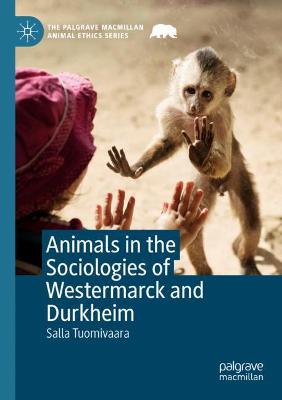
MORE ABOUT THIS BOOK
Main description:
This book explores why animals, at some point, disappeared from the realm and scope of sociology. The role of sociology in the construction of a science of the 'human' has been substantial, building representations of the human sphere of life as unique. Within the sociological tradition however, animals have often been invisible, even non-existent. Through in-depth comparisons of the texts of prominent early sociologists Emile Durkheim and Edward Westermarck, Tuomivaara shows that despite this exclusion, representations of animals and human-animal relations were far more varied in early works than in the later sociological cannon.
Addressing a significant gap in the interdisciplinary field of animal studies, Tuomivaara presents a close reading of the historical treatment of animals in the works of Durkheim and Westermarck to determine how the human-animal boundary was established in sociological theory. The diverse forms in which animals and 'the animal' appear in the works of early classical sociology are charted and explored, alongside the sociological themes that bring animals into these texts. Situated in contemporary theory, from critical animal studies to posthumanism, this important book lays the groundwork for a disciplinary shift away from this sharp human-animal dualism.
Contents:
1. Why study the roots of exclusion of animals in sociology?2. The era of Westermarck and Durkheim: sociology and society3. Common interests and debates between Durkheim and Westermarck4. Diversity of animals in Durkheim's and Westermarck's texts5. Different animals of Westermarck and Durkheim6. Uses of animals in early sociology7. Different Others of Westermarck and Durkheim8. Different ideas of humans of Durkheim and Westermarck9. Conclusion.
PRODUCT DETAILS
Publisher: Springer (Springer Nature Switzerland AG)
Publication date: September, 2020
Pages: 261
Weight: 454g
Availability: Available
Subcategories: Veterinary Medicine