
(To see other currencies, click on price)
MORE ABOUT THIS BOOK
Main description:
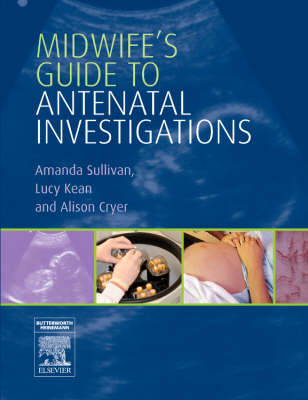
The technologies that underpin antenatal investigations are changing rapidly and it is essential that midwives and all health professionals involved in antenatal care are informed about current research and have the skills needed to understand the tests they instigate. Midwife's Guide to Antenatal Investigations explores a comprehensive range of investigations used in pregnancy. It links routine antenatal care with specialist investigations, describing when follow up is required and how to interpret results. The book is written in a clear, accessible style and explains all terminology as well as discussing the relevant technological developments. The book is an ideal source of reference in clinical situations and is designed to enable the midwife to make evidence-based decisions.
Antenatal testing can reveal problems or abnormalities with the fetus and the midwife then faces the difficult task of giving this news to the parents. The authors have provided guidance on how to approach discussions on particularly sensitive issues and advise on how a midwife can provide non-intrusive support when parents receive bad news. A chapter written by the charity Antenatal Results and Choices gives an account of parents' experiences when an abnormality was diagnosed in their baby. This gives direct insight into the parents' feelings and helps the midwife to understand how best to provide the sensitive care needed in such cases.
The fundamental principles underlying genetic and chromosomal testing are explored and the authors consider the historical and cultural aspects of antenatal investigations as well as looking forward to the potential impact of these technologies on the future role of the midwife.
This book is an essential resource for all health professionals involved in delivering antenatal care to women and their families.
The only book of its kind, developed to provide midwives with a comprehensive guide to antenatal investigations in an accessible format.
Includes a range of clinical scenarios and considers the parents' point of view, which brings the tests to life and helps midwives understand the clinical application and impact of investigations.
A chapter written by the national charity ARC (Antenatal Results and Choices) relates first-hand accounts from parents whose newborns have been diagnosed with an abnormality, providing insight into how best to provide sensitive care to parents facing difficult situations.
Extensive illustrations, diagrams, summary tables and ultrasound scan images make the information in the book clear and understandable.
Best practice guidance from National Screening Committee (NSC) are provided to ensure all practitioners are aware of the NSC policy.
Clinical guidance is supported by explanations of common and specialist terminology and developments in technology.
The fundamental principles underlying genetic and chromosomal testing are described.
The historical and cultural aspects of antenatal investigations are discussed, as well as the potential impact of these technologies on the future role of the midwife.
Contents:
Section One: Clinical Practice in Context
1. The Development of Fetal Investigations
2. Historical and Sociological Perspectives
3. Involving Parents: Information and Informed Decisions
4. Pregnancy Loss, Breaking Bad News and Supporting Parents
Section Two: Maternal Investigations
5. Haematology in Pregnancy
6. Maternal Disease in Pregnancy
7. Infections in Pregnancy
Section Three: Fetal Investigations
8. First Trimester Ultrasound Scans
9. The Second Trimester Detailed Anomaly Scan
10. Biochemical Markers in Downe's Syndrome Chromosomal and Genetic Testing
11. Assessment of Fetal Wellbeing
Section Four: Ongoing Developments
12. Antenatal Investigations for the Future
PRODUCT DETAILS
Publisher: Elsevier (Churchill Livingstone)
Publication date: July, 2006
Pages: 212
Weight: 476g
Availability: Available
Subcategories: Midwifery, Obstetrics and Gynaecology