
(To see other currencies, click on price)
MORE ABOUT THIS BOOK
Main description:
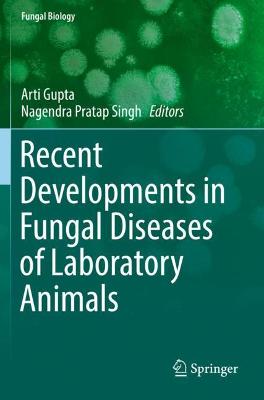
Fungal growths affect both human and animal well-being. Many natural pathogens of laboratory animals alter host physiology, rendering the host unsuitable for experimental uses. While the number and prevalence of few pathogens have declined considerably, many still turn up in laboratory animals and represent unwanted variables in research. Investigators using laboratory animals in biomedical experimentation should be aware of the profound effects that many of these agents can have on research. What does the future hold regarding the natural pathogens of laboratory animals? The selection of an animal model must carefully address issues of the type of human disease to mimic, the parameters to follow, and the collection of the appropriate data to answer those questions being asked. Overall, animal models of fungal infection will continue to deepen our understanding of how these infections occur.
This book provides a valuable source of information to biological and biomedical scientists and to clinical and doctoral researchers working in the area of fungal infections and diseases of laboratory animal species.
Contents:
Preface.
1. Fungal diseases of AnimalsDr. Claudia Cafarchia, Dipartimento di Medicina Veterinaria, Universita` degli Studi di Bari, Str. prov.le per Casamassima Km 3, 70010 Valenzano, Bari, Italy
2. Factors influencing the development of infectious fungal disease in animals. Dr. Priyanka Verma, Assistant Professor Department of Microbiology Akal College of Basic Sciences Eternal University Baru Sahib, Sirmour-173101 Himachal Pradesh, India
3. Immunological diagnostic of fungal disease in animalsDr. Kildeep Dhama, Avian Diseases Section, Division of Pathology, Indian Veterinary Research Institute, Izatnagar, Bareilly-243122, India
4. Molecular identification of fungal diseases of animalsProfessor Keyvan Pakshir, Department of Parasitology and Mycology, Basic Sciences in Infectious Diseases Research Center, School of Medicine, Shiraz University of Medical Sciences, Shiraz 71345-45794, Iran
5. PAN-PCR based diagnostic of fungal diseases of lab animalsDr. Iwona Dabrowska, Division of Microbiology, Department of Preclinical Sciences, Faculty of Veterinary Medicine, Warsaw University of Life Sciences-SGGW, Warszawa, Poland
6. Opportunistic invasive fungal infections of animals.Dr Parisa Badiee, Prof. Alborzi Clinical Microbiology Research Center, Nemazi Hospital Zand Ave., 7193711351 Shiraz, Iran
7. Common practices to control fungal diseases of lab animals. Professor David G. Baker, Division of Laboratory Animal Medicine, School of Veterinary Medicine, Louisiana State University, Baton Rouge, LA 70810
8. Histopathologic Diagnosis of Fungal Infections of lab animals. Dr. Jeannette Guarner, Department of Pathology and Laboratory Medicine, Emory University Hospital, 1364 Clifton Rd., Atlanta, GA 30322.
9. Development of sandwich dot-ELISA/Serological tools for the detection of fungal diseases of animals. Dr. Ahmed M. Abdel-Azeem Ph D, Mycosystematist Botany Department, Faculty of Science, University of Suez Canal, Ismailia, 41522 Egypt
10. Mycotoxins produced by different fungal species in animals Professor A.A.Abdel Hameed, National Research Centre, Dokki, Giza, Egypt
11. Detection of secondary metabolites (mycotoxins) during fungal infections to lab animals. Prof. Gerardo Diaz-Godinez, Laboratorio de Biotecnologia, Centro de Investigacion en Ciencias Biologicas, 9 Universidad Autonoma de Tlaxcala, Ixtacuixtla, Tlax. Mexico
Index.
PRODUCT DETAILS
Publisher: Springer (Springer Nature Switzerland AG)
Publication date: August, 2020
Pages: 169
Weight: 454g
Availability: Available
Subcategories: Veterinary Medicine