
(To see other currencies, click on price)
MORE ABOUT THIS BOOK
Main description:
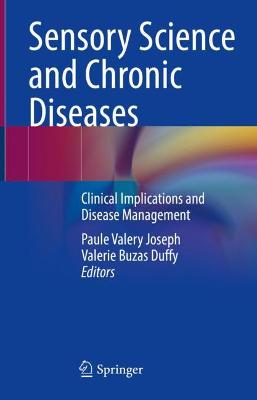
The textbook provides an overview of the sensory science field in the context of diseases such as obesity and Coronavirus disease 2019 (COVID-19). This book brings a summary of the state of the science in key areas and provides examples of translational science from using cellular and rodent models to human clinical trials and community health. The volume structure leads the reader through the physiology of taste and smell into how sensory testing for taste and smell is studied, basic mechanisms, various protocols that are used throughout the field along with the pros/cons of the current methods used. This resource is intended for classroom teaching, for novice researchers in sensory research as well as students and postdoctoral fellows. Example of courses are nutrition, basic nursing, interdisciplinary health courses, sensory perception (psychology), neuroscience, and medical courses, dentistry, food science and others.
Contents:
Table of Contents
1. IntroductionDescription: Summary of the contents in the book and gaps identified Dr. Paule Joseph, National Institutes of Health Dr. Valerie Duffy, University of Connecticut Email: Valerie.duffy@uconn.edu and paule.joseph@nih.gov
The biology/definition of chemical senses (Chapters 2-6)
2. Taste and Smell Systems Development During Infancy and ChildhoodDescription: Provide an overview of taste and smell systems in development for humans primarily in childhood. Implications for development of feeding and eating behavioursDrs. Julie Mennella and Alissa Smethers, Monell Chemical Senses CenterEmail: mennella@monell.org
3. Anatomy, Physiology and Neurobiology of Olfaction and Gustation Description: The anatomy and physiology of olfaction and gustation, the neuromatrix will be reviewed. Neurobiology of taste and smell from the molecular level through the sensory science matrix is provided in the context of current evidence. Dr. Rosario Jaime- Lara & Dr. Paule Joseph, National Institutes of Health (NIH) Email: rosario.jaime-lara@nih.gov
4. Measurement of Olfaction: Screening and Assessment Description: Summary of how taste and smell is measured in human studies. Description of psychophysical methods and neuroimaging methods. Dr. Sanne Boesveldt, Wageningen University &ResearchDr. Valentina Parma, Temple University Email: valentina.parma@temple.edu
5. Measurements of Gustation: Screening and Assessment Description: Summary of how taste and smell is measured in human studies. Description of psychophysical methods and neuroimaging methods. State-of-the-science on smell and taste studies in large cohort studies. Dr. Valerie Duffy, University of Connecticut Email: Valerie.duffy@uconn.edu
6. Integration of Taste, Smell and Chemesthesis: Clinical Implications Description:Author: Dr. Brianne Linne & Dr. Christopher Simons- Ohio State University Email: simons.103@osu.edu
The state-of-the-science on taste and olfaction (Chapter 7)
7. Overview of Olfaction and Gustation under Metabolic InfluencesDescription: Recently published work and emerging research efforts have suggested that the olfactory and gustatory system is intimately linked with the endocrine systems that regulate or modify energy balance. This section will provide an overview of the state of the science Dr. Valerie Duffy, University of Connecticut and Dr. Paule Joseph, National. Institutes of Health Email: Valerie.duffy@uconn.edu and paule.joseph@nih.gov
Disease cohorts (Chapters 8-12)8. Studies on the Sense of Smell and Taste in individuals with Obesity and Substance Use DisordersDescription: State-of-the-science of how obesity affects smell (olfaction) and taste (gustation)Dr. Carlotta Vizioli, Brianna Brooks Dr. Paule Joseph, National Institutes of Health Email: paule.joseph@nih.gov
9. Taste and Smell Alterations and Neurodegenerative Disorders Description: State-of-the-science of taste and smell disturbances in individuals with Alzheimer's, Parkinson's and dementia,Dr. Claire Murphy, San Diego State University Email: cmurphy@sdsu.edu
10. Studies on the Sense of Smell and Taste in individuals with Substance Use Disorders (SUD)Description: State-of-the-science of how SUD affects smell (olfaction) and taste (gustation)Dr. Khusbhu Agarwal, Christian McDuffie Dr. Paule Joseph, National Institutes of Health Email: paule.joseph@nih.gov
11. Taste and smell in Weight Loss Surgery Description: State-of-the-science of Taste and Smell Disturbances in Individuals undergoing bariatric surgery (weight loss surgery). Dr. Yanina Pepino, University of Illinois at Urbana-Champaign Email: ypepino@illinois.edu
12. Taste and Smell alterations and Cancer Therapies Description: State-of-the-science of taste and smell disturbances in cancer populations. Focus on current challenges and areas of future discovery.Dr. Alissa Nolden, UMass AmherstEmail: anolden@umass.edu
13. Oral Health and Chemosensory Problems Description: How clinicians specially dentist can assess chemosensory problemsDr. Miriam Grushka, William Osler Health System Toronto Email: miriamgrushka@gmail.com
The future of the field (Chapter 13-14)
14. Final Title to be Determined but the chapter will be focus on COVID-19 taste and smell loss Description: State-of-the-science on COVID-19, taste and smell loss Dr. Danielle Reed, Monell Chemical Senses Center Email: reed@monell.org
15. Oral Health and Microbiome: Implications for Taste Description: State-of-the-science on the role of oral health and emerging science of the microbiota and its implications for taste. Dr. Surkith Ganesan, University of Iowa Email: sukirth-ganesan@uiowa.edu
PRODUCT DETAILS
Publisher: Springer (Springer Nature Switzerland AG)
Publication date: December, 2021
Pages: None
Weight: 629g
Availability: Available
Subcategories: Biochemistry, Diseases and Disorders, Neuroscience, Nursing, Nutrition